

GHK-Cu
50mg
£17.00
Sale price
£17.00
Regular price
Skip to product information
GHK-Cu
★★★★
★
4.7
·
200+ orders served
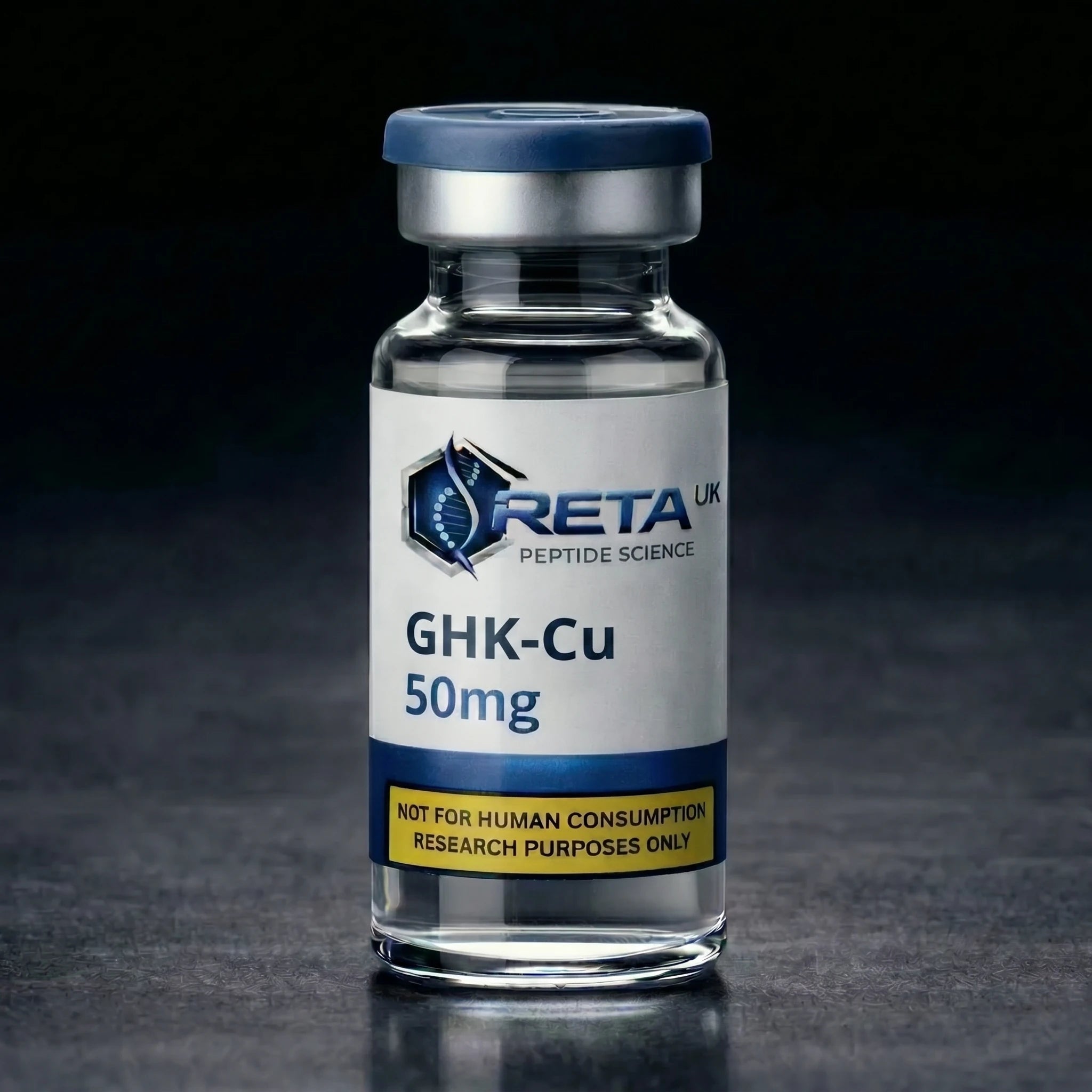
GHK-Cu is a synthetic copper peptide complex composed of three amino acids — glycine, histidine, and lysine — bound to a copper(II) ion. Originally identified in human plasma, this naturally occurring molecule has become one of the most extensively investigated compounds in regenerative biology research. Its unique copper-binding properties make it a reference compound for studying redox-mediated cellular signalling and matrix remodelling pathways.
Available in 50mg vials. Every batch is HPLC tested and independently verified to a minimum of 99% purity. Certificate of Analysis available on request.
Research applications include:
- Wound healing and dermal regeneration model studies
- Collagen synthesis and extracellular matrix remodelling research
- Glycosaminoglycan and proteoglycan biosynthesis pathway investigation
- Cellular redox balance and oxidative stress mechanism research
- Stem cell proliferation and differentiation studies
- Hair follicle stem cell pathway research
- Gene expression modulation studies (over 4,000 human genes documented)
Product specifications:
- Form: Lyophilised powder
- Purity: ≥99% (HPLC verified)
- Storage: −20°C, protected from light and moisture
- Available size: 50mg
- Origin: UK warehouse, same day dispatch
✓
Multibuy Discount Available
Buy 2 save 5%
Buy 3 save 10%
Buy 4 save 15%
Buy 5+ save 20%
£17.00
Sale price
£17.00
Regular price
✓ 99%+ Purity Guaranteed
✓ COA Available
✓ Same Day UK Dispatch
✓ Secure Checkout
⚠ For research purposes only. This product is not intended for human or veterinary use, consumption, or self-administration. Must be handled by qualified professionals in a suitable laboratory environment. Not evaluated by the MHRA or any regulatory authority for therapeutic use. Read full disclaimer →